
Urabá, una tierra de sincretismo cultural y biodiversidad, de voces y piel, donde se funde el sol, los ríos y el océano atlántico para dar vida al Mar dulce de Antioquía, origen de las cosas buenas de Urabá, con sus 498 kilómetros de costa, distribuidas entre Turbo, Necoclí, San Juan de Urabá y Arboletes, con 290 kilómetros de playa, y más de 20 playas turísticas, tanto en la zona urbana como en la rural, que se configura como un corredor biológico; junto a la cuenca del río León, con sus 220.137,82 de hectáreas, y sus principales afluentes: los ríos Grande, Apartadó, Carepa, Chigorodó, Guapa, Juradó y Villarteaga, además del rio Atrato y otros; sumado a las 5.687 hectáreas del mágico ecosistema de manglares, que son lugares de cría de peces, que actúan como barreras rompevientos, su impresionante sistema de raíces son un filtro para los sedimentos y, al mismo tiempo, estabilizan los suelos; estos ecosistemas anfibios protegen las costas de la erosión y son el hábitat de numerosas especies.
Urabá, land of cultural syncretism and biodiversity, of voices and skins, where the sun, the rivers and the Atlantic ocean blends to give life to the sweet sea of Antioquia, origin of the good things of Urabá, with its 498 kilometers of coast distributed between Turbo, Necoclí, San Juan de Urabá and Arboletes, with 290 kilometers of seaside and more than 20 touristic beaches as in the urban zone as in the rural area, that is configured as a biological corridor; alongside the basin of río León, with its 2002.137,82 hectares and its main tributaries: The Grande, Apartadó, Carepa, Chigorodó, Guapa, Juradó and Villarteaga rivers, plus the Atrato river and others, adding to that, the 5.687 hectares of the magical mangroves ecosystem, which are places for fish raising that act as windbreaker barriers, its amazing root system is a filter for sediments and, at the same time stabilizes the ground; these amphibian ecosystems protect the coast from erosion and are the habitat of numerous species.
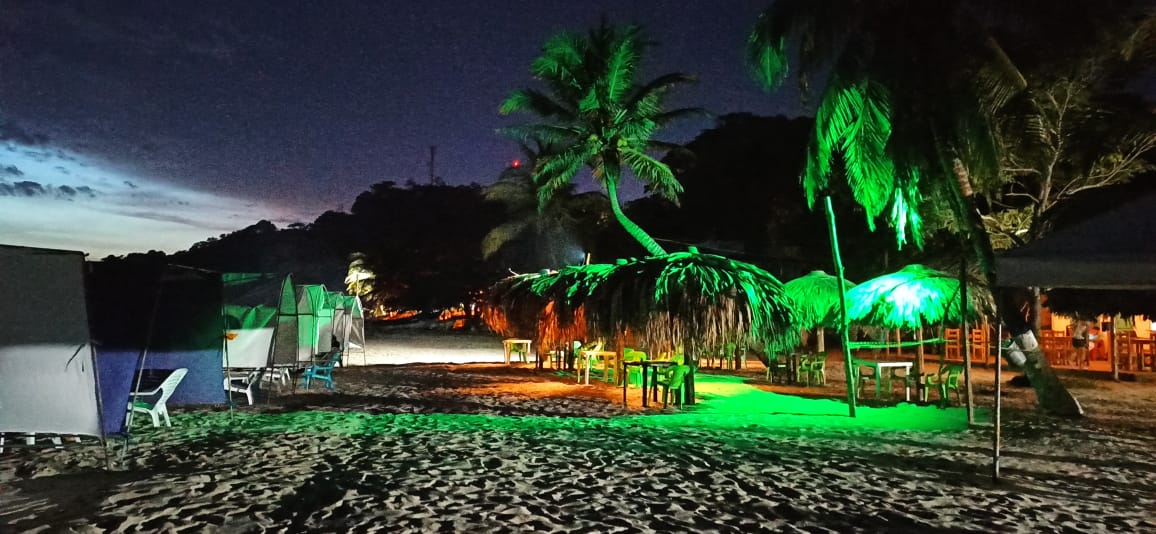
Necoclí nocturno, un lugar mágico
Urabá es el punto de encuentro de todos los sentidos, es sabores, son olores, sensaciones para quienes se aventuran a llegar a la Esquina de oro de Antioquia, puente entre Centro y Suramérica, en donde se respira y refresca todo: la vida, los sueños, la piel y el corazón. En su mar dulce, abriga el fuego de todas las esperanzas de lugareños y forasteros, quienes, sueñan que después de 50 años, una vez se termine la construcción del túnel del Toyo y demás infraestructura vial, con vuelos desde Medellín o vía fluvial y marítima desde el Chocó y quede habilitada la vía al Mar, estará a 4 horas de la capital de la montaña.
Urabá is the point of encounter in all senses, flavors, smells and sensations for those who adventure to reach to the golden corner of Antioquia, bridge between center and south America, where everything is breath and refreshed: Life, dreams, the skin and heart. In its sweet sea, shelters the fire of al the hopes of the locals and foreign, who dream that after 50 years, once the construction of the tunnel of Toyo and different road infrastructure projects are finished, with flights from Medellin or waterway and marine way from Chocó and the road to the sea is available, people will be at 4 hours of the capital of the mountain.
Cuando se llega a Urabá, por tierra, aire o mar, se percibe el contraste entre la serranía de Abibe, misteriosa, exótica, azulosa, de silencios largos y lugar de paso y vuelos de aves del mundo, se cruzan las montañas o largos puentes que dejan ver, el espectacular paisaje del cañón de la Llorona, y el valle aluvial que humedece el rio León con su red hídrica de ríos cortos; que de acuerdo con Francy Chica, quien llegó con su familia del centro de Antioquia, quedé enamorada “del paisaje, de ese verde y los atardeceres que denotan esperanza”
When you arrive to Urabá, by land, air or sea, the contrast between the mountain range of Abibe, mysterious, exotic, blueish, of long silences and place of passage and flight of birds of the world. A mix of mountains and long bridges that allow to see, the spectacular landscape of La Llorona canyon, and the alluvial valley, that humidify the León River with its water network of short rivers that, according to Francy Chica, who arrived with her family from the center of Antioquia, fell in love with “the landscape, that green and the sunsets that denote hope”.
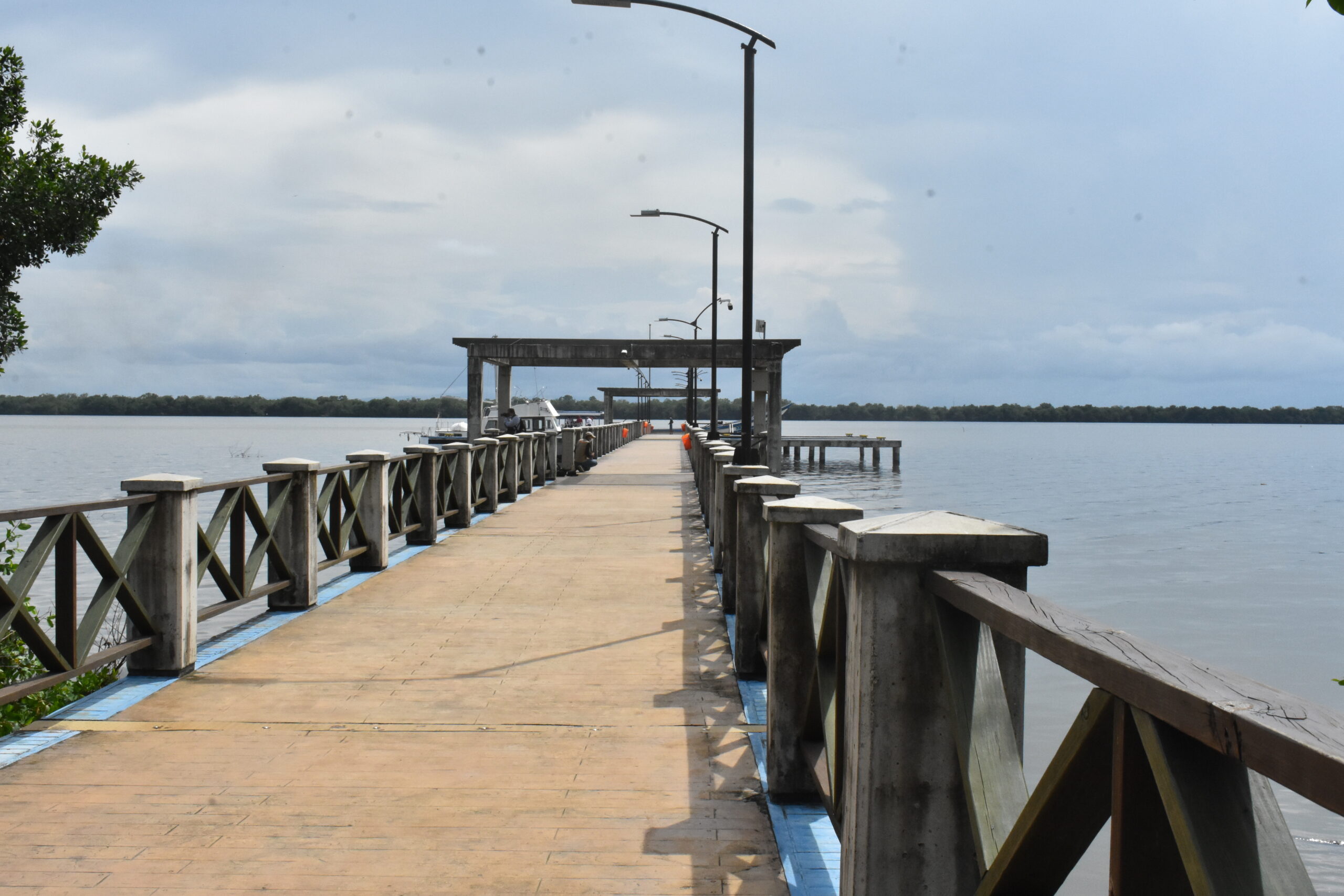
Muelle turístico de distrito de Turbo
Magia multi – pluricultural (Multi – pluricultural magic)
Urabá es cuna de asentamiento de las comunidades indígenas Emberá Katio, Chami, Zenú y Gunadule, que en su legua recrean sus historias, su vida, en medio de ensueño, magia, ritos, encantamiento, siendo sus capitales indígenas y sitios sagrados los lugares en donde reviven todas las tradiciones, mueven y elevan el alma de hombres y mujeres que consienten vivir con ellas y para ellas. En Mutatá, está la primera capital indígena, Jaikerazabi, allí, el viajero podrá disfrutar de un encuentro vivo con la naturaleza, la cultura Embera Katio y llevarse una artesanía; en Apartadó, se puede visitar a la comunidad indígena Embera Chami de Ibudo Las Playas, en la vereda Caracolí, en donde se tiene otra de las capitales indígenas con un sendero ecológico y una propuesta etnoturística por descubrir. La inmersión cultural puede continuar, en los límites entre Turbo y Necoclí, con la cultura Gunadule, lugar donde se pueden adquirir las hermosas molas, expresión y síntesis de su cosmovisión.
Urabá is a cradle of settlement for native communities Emberá Katio, Chami, Zenú and Gunadule, that in their language, recreate stories and their lives, between reverie, magic, rituals, enchantment, being their native capitals and sacred sites the places where all the traditions are revived, moved and elevate the soul of men and women that consent to live with and for them. In Mutatá, is the first native capital Jaikerazabi, there, travelers can enjoy of a live encounter with nature the Embera Katio culture and take a souvenir; in Apartadó, the Embera Chami native comuniti from Ibudo Las Playas can be visited, in the settlement of Caracolí, there is another native capital with an ecological trail and an ethno-touristic proposal to be discovered. The cultural immersion continues, between the borders of Turbo and Necoclí, with the Gunadule culture, a place where molas, expression and synthesis of the Gunadules can be acquired.
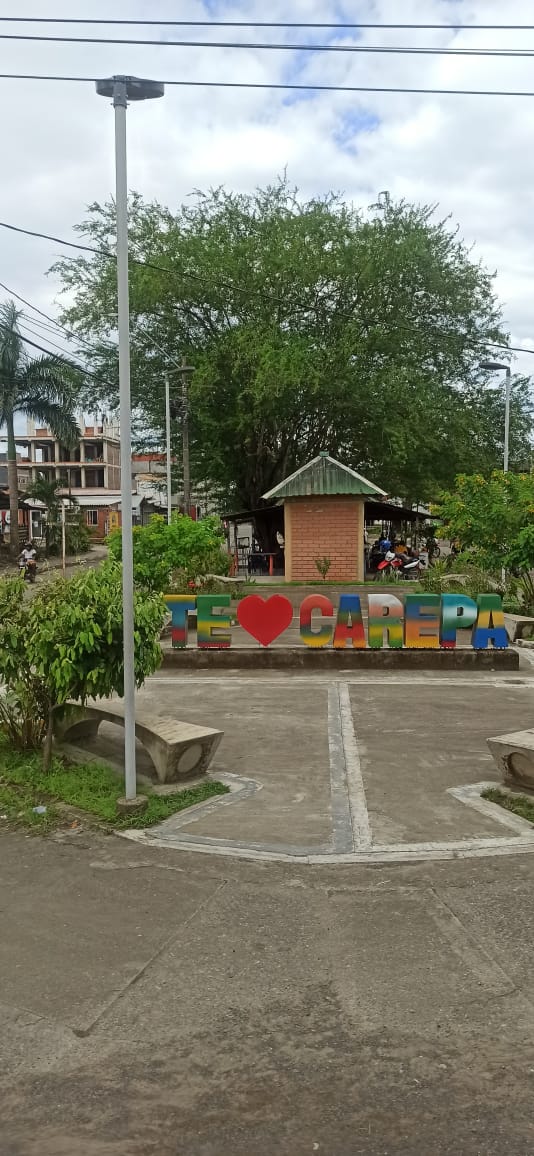
Parque cercano a la terminal de transporte del municipio de Carepa
El etnoturismo y su magia vital se puede vivir en cualquiera de las 17 comunidades existentes en la región. Además, de la diáspora afrocolombiana, que representa el 50% de población regional, junto al 15% de población indígena y el 35% de población mestiza, agregándose, los que llegan de todas partes del mundo de tránsito, de turismo y a establecerse, forjado un territorio pluricultural privilegiado en expresiones artísticas que se nutre de un sinnúmero de tradiciones y costumbres propias y de otras latitudes; un territorio de espíritu cosmopolita.
The ethno-tourism and its vital magic can be lived in any of the 17 existing communities in the region. Besides of the Afro-Colombian diaspora that represents the 50% of the regional population, along with the 15% of native population and the 35% of the mixed-race population, adding, those who arrive from all the corners of the world for passage, tourism and to establish, forging a pluricultural territory, privileged in artistic expressions that nurture an endless number of traditions and costumes from the region and other latitudes, a cosmopolitan spirit territory.
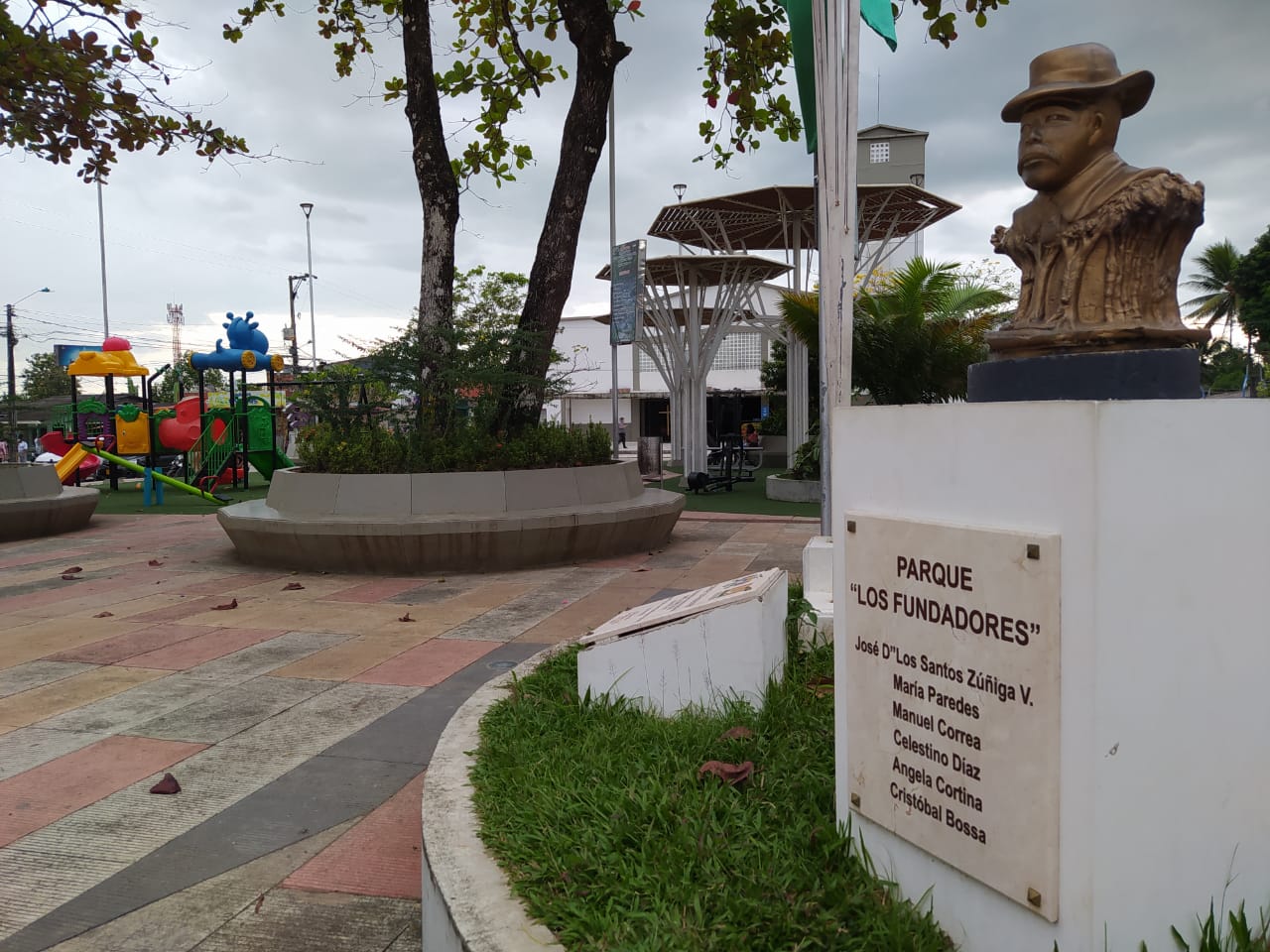
Parque Los Fundadores, Chigorodó Antioquia
En Urabá, una de las almas de la expresión cultural, es el bullerengue, que se mantiene como legado ancestral que influencia las costumbres y expresiones locales, base de nuevos imaginarios, que, junto al porro, la danza y la trova, hacen de sus encuentros una fiesta de la vida artística y el encuentro de cultura. Valores estéticos y creativos que dialogan con el entorno. De acuerdo con Juan Prada, lleva toda una vida en Urabá, y considera que “Urabá es historia, es contraste, tenemos una parte de la cordillera y ese aroma del mar. Es el puente del mundo, todos los pueblos del mundo que han pasado dejan un pedazo en Urabá”.
In Urabá, one of the souls of cultural expression, is the bullerengue, which continues as an ancestral legacy that influences costumes and local expressions, base of new imaginaries that, along with the porro, the dance and the trova, turns every encounter into a party of artistic life and cultural encounter, esthetic and creative values that dialogue with the envioronment. According to Juan Prada, who has lived in Urabá all his life and considers that “Urabá is history, is contrast, we have a part of the mountain range and that breeze from the sea. Is the bridge of the world, all the towns of the world that have passed, left a piece of them in Urabá”.
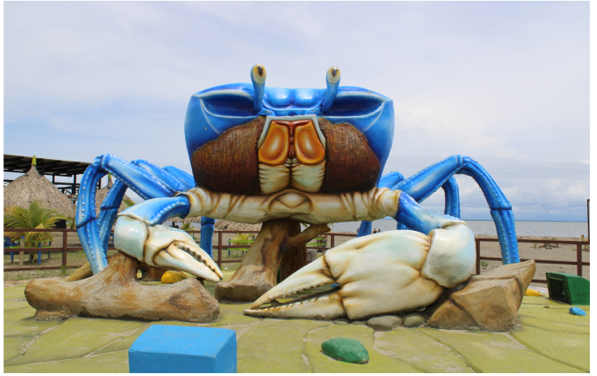
Cangrejo Azúl, Turbo Antioquia
El paisaje Cañón de la Llorona (La Llorona canyon landscape)
Al paso por Mutatá, nos recibe imponente, sinuoso el río Sucio, con su espectacular cañón de la Llorona, centinela de la puerta de entrada a Urabá; al que le han dado categoría de parque, una estación obligada para la fotografía y el disfrute del paisaje. Quienes desean, se sumergen en las aguas del Rio Mutatá, en los saltos del Tigre, Chorreras y Chontadural, en la vereda Chontaduralito; o se disfruta del calmado rio León, con su larga llanura aluvial que baña el tapiz de ganadería, banano y plátano; río que guarda los secretos de amor que se han bañado en sus aguas; viejas palabras que buscan la boca, de pasos de aves, brisa y caminantes. Para el poeta Juan Mares, quien llegó de las tierras agrestes de Tierra Alta, “me enamora el carisma humano de sus habitantes, la pluriculturalidad partiendo desde la trietnicidad. Me enamora su historia como primer territorio continental colonizado por europeos, la ancestralidad aborigen de donde emana nuestra característica Triétnica”.
Passing by Mutatá, travelers are received by the imponent and sinuous Sucio river, with its spectacular Llorona Canyon, sentinel of the gate to Urabá; which has received the category of park, an obligated station for photography and admiring landscapes. Those who want, can dive in the waters of the Mutatá river, the leaps of El Tigre, Chorreras and Chontadural, in the Chontaduralito settlement; or can enjoy of the calmed León river, with its large alluvial plane that baths the tapestry of cattle raising, banana and plantain; a river that keeps the secrets of love that have washen in its waters; old worlds that search the mouth, bird steps, breeze and walkers. For the poet Juan Mares, who arrived from the arid lands of Tierra Alta, “I fell in love with the human charisma of their habitants, the multiculturalism starting from the tri-ethnicity. I love its history as the first continental territory colonized by Europeans, the aboriginal ancestry where emanates our tri-ethnic characteristics”.
La biodiversidad: una cuenca de vida (Biodiversity: A basin of life)
Los amantes del avistamiento de aves, tienen la oportunidad de registrar la más de 350 especies de aves, incluyendo especialidades como el Bobo, Bucco noanamae, y el Colibrí, Lepidopyga coerulescens. Además de la asombrosa avifauna residente, la región es un sitio muy importante para la migración. Más de medio millón de rapaces migratorias son registradas cada año entre octubre y noviembre además de miles de golondrinas y tiránidos.
The lovers of bird sightseeing, have an opportunity to register the more than 350 bird species, including specialties like the Bobo Bucco noanamae, and the hummingbird, Lepidopyga coerulescens. Besides the amazing resident avian fauna, the region is a very important for migration. More than half million of migratory raptors are registered every year between october and November besides thousands of swallows and tyants.
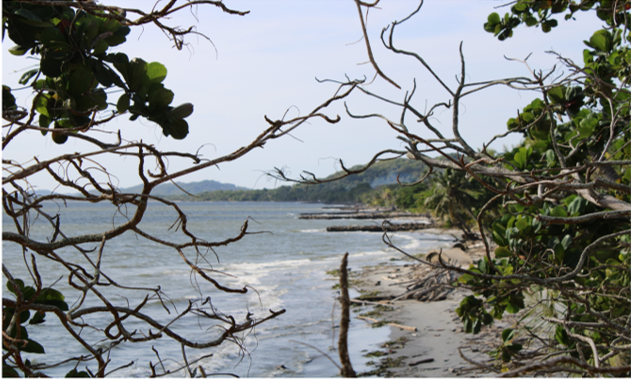
Urabá está rodeada de naturaleza y biodiversidad donde mires
Y de la red hídrica, disponibles para el disfrute en Mutatá, con lugares como Piedras Blancas, rio Bedó, Mutatá, Villarteaga, Porroso, La Fortuna pasando al río Chigorodó y el mismo río León; para luego disfrutar de la zona rosa de Apartadó, y su calle de las mil notas musicales, un espacio para cada gusto, tangos, rancheras, vallenatos, rock, reggae y los ritmos ancestrales del bullerengue, chirimía y música urbana. Al norte por: Turbo, con playa dulce, el waffe, La Martina, bahía Colombia y Bocas del Atrato; en Necoclí, playas y sitios en proceso de reconocimiento y exploración como la Ensenada de Río Negro, en donde es posible el avistamiento de aves y primates, a las que se llega a través de lancha y con el apoyo de guías locales, además de las playas el Pescador y Malecón, en la zona urbana, y las de San Sebastián, río Necoclí, Casablanca y El Totumo, Mulatos, en el sector rural; y en San juan de Urabá, las playas de Damaquiel, y en Uveros, disfrutar del que se tiñe de rosa en época de verano y en el área urbana, en las playa de Mambaco Pacheco, y al final, terminar en Arboletes, en el parque volcán de lodo, ubicado a 15 minutos de la cabecera municipal y a la orilla del mar, además de disfrutar del atardecer en los muelles turísticos.
The water network, available for the enjoyment in Mutatá, with places like Piedras Blancas, Bedó river, Mutatá, Villarteaga, Porroso, La Fortuna passing by Chigorodó river and the very same León river; then enjoy the pink zone of Apartadó, and its street of the thousand musical notes, a space for every taste, tangos, rancheras, vallenatos, rock, reggae and the ancient rythms of bullerengue, chirimía and urban music. To the north: Turbo, with its sweet beach, the waffe, La Martina, Colombia bay and Bocas del Atrato; in Necoclí, beaches and sites in process of recognition and exploration like the Rio Negro cove, where is possible the bird and primate sightseeing which can be reached through a motorboat and with the support of local guides besides, the beaches El Pescador, and Malecón, in the rural area; and San Juan de Urabá, the beaches of Damaquiel, and in Uveros, enjoy the river that dyes pink during summer and in the urban area, the beaches of Mambaco Pacheco, and in the end, finish in Arboletes, at the mud volcano park, located at 15 minutes from the municipal head and near the seashore, besides enjoying the sunset at the touristic piers.
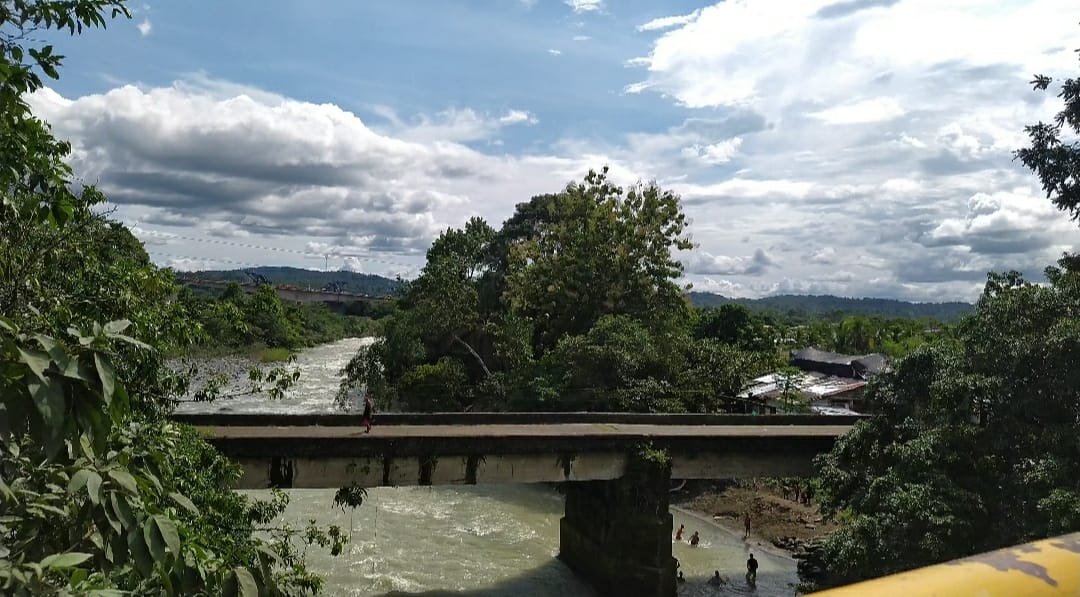
Río Mutata, lugar turístico
Su gente, mi amada Urabá (Its people, My beloved Urabá)
Para Jina Palacios, quien vino por unos días, y ya lleva 20 años, Urabá lo es todo, “Cuando se caminan las calles de los municipios, puedes sentir todos los olores, a limonero, a canela, a banano, a hierba fresca, las María Mulatas nos recuerdan lo rural, la vida del campo, y aquí, todavía es fresca y transparente la mirada de la gente, su sonrisa franca y amable. Amo todo de Urabá, amo su gente, la alegría, es gente fuerte, gente valiente, que ama, lucha y siente. Habitar Urabá, es un privilegio”. Afirma con emoción.
For Jina Palacios, who came to Urabá only for a few days and has lived in the area over 20 years, Urabá is everything “When you walk the streets of the municipalities, you can feel all the smells, lemon tree, cinnamon, banana, fresh grass, the María Mulatas remind us the rural, the life in the country, and here, the look of the people is still fresh and transparent, their smiles are kind and sincere. I love everything about Urabá, I love its people, the joy of strong and courageous people that love, fight and feel. Living in Urabá is a privilege” she comments with excitement.
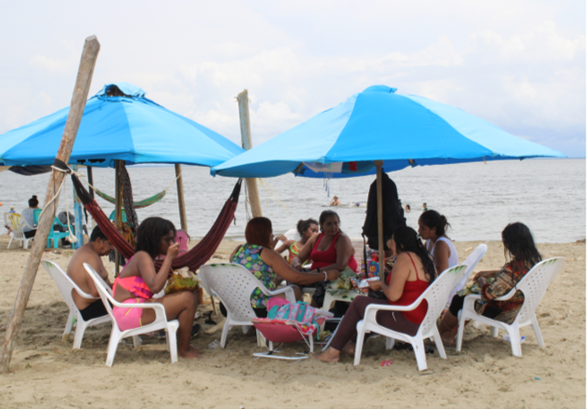
Personas disfrutando de la playa y la brisa
En Urabá se respira la vida, se olvidan las angustias y los miedos, se funde el sincretismo cultural con la vida del universo mismo. El tejido de ríos baña la vida con la brisa dueña del agua y las horas del paraíso del mar dulce de Antioquia, quien viene transforma los días sus noches.
In Urabá you can breathe life, forget the anguishes and fears, it blends the cultural syncretism with life and the universe itself. The tissue of rivers bathes the life with the breeze owner of the water and the hours in the paradise of the sweet sea of Antioquia, that transforms its days and nights.
¿A dónde ir? ¡¡Al mar dulce de Antioquia!!
Where to Go? To the sweet sea of Antioquia!
Este artículo es parte de un especial periodístico que realizamos en alianza con COMFAMA, con el propósito de honrar nuestro mar, nuestra identidad, el paraíso que esconde cada rincón de Antioquia y el talento periodístico que forja en nuestras regiones
This article is part of a newspaper special made in alliance with COMFAMA, with the purpose of honor our sea, out identity, the paradise hidden in each corner of Antioquia and the journalist talent that is forged in our region.
Te invitamos a llenar este Quiz sobre nuestra amada Urabá y descubre lo mucho que sabes de este paraíso:


0 comentarios